

Waiting for an income tax refund can be stressful, especially when refund timelines are stretched and social media is full of complaints about delays. In this environment, a fake ITR refund message can easily trigger panic. That is exactly how a taxpayer recently lost ₹1.5 lakh after responding to a fraudulent refund alert that looked like an official communication.
The incident highlights how scammers are exploiting refund anxiety and using urgency as a weapon during the tax filing season.
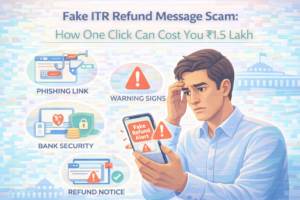
How the Fake ITR Refund Message Trap Works
The scam usually begins with an SMS, email, or phone call claiming that an income tax refund is pending or delayed. The message often warns that immediate action is required to avoid cancellation, penalties, or permanent loss of the refund. A link is included, directing the taxpayer to a fake website that closely resembles the official income tax portal.
In the reported case, the taxpayer clicked the link from a fake ITR refund message, entered personal details, and shared sensitive information. Within minutes, ₹1.5 lakh was siphoned from the bank account. The fraud was completed before the victim realised that the message was fake.
Why Refund Delays Make Taxpayers Vulnerable
Refund delays have been a recurring concern for many taxpayers. While authorities have clarified that refunds are issued only after verification, data matching, and scrutiny, scammers take advantage of the uncertainty. Messages mentioning “refund delay”, “final reminder”, or “urgent verification” are designed to create fear.
Scammers know that taxpayers are already anxious. A fake ITR refund message arriving at the wrong moment can override caution, pushing people to act without verifying the source.
Official Advisory on Income Tax Refund Scams
Following multiple incidents, the Income Tax Department has issued advisories warning taxpayers against fraudulent communications. The advisory clearly states that official authorities do not ask for one-time passwords, bank details, or login credentials through SMS links, emails, or phone calls.
Taxpayers have been advised to verify refund status only by manually visiting the official portal and never by clicking on links received through unsolicited messages. Suspicious communications should be reported through the channels mentioned in official advisories.
Common Red Flags in a Fake ITR Refund Message
A fake income tax refund message often shares some common warning signs. These messages use threatening or urgent language and pressure taxpayers to act immediately. They may claim that the refund will be cancelled within hours or that penalties will apply if details are not updated.
Another red flag is a shortened or unusual website link. Any message asking for OTPs, debit card details, or bank credentials is almost certainly part of an income tax refund scam.
Why So Many Taxpayers Fall for Refund Scams
Refund-related scams succeed because they exploit human behaviour. The promise of receiving money combined with fear of losing it creates a perfect trap. Scammers deliberately time fake ITR refund messages during peak refund season when taxpayers are actively checking their bank accounts and refund status.
The language used is designed to sound official and intimidating, leaving little room for rational thinking.
How to Stay Safe During Refund Season
Refund delays can happen due to verification or mismatch issues, but urgent requests for confidential information are never part of the official process. If a message creates panic, demands immediate action, or threatens loss of refund, it should be treated as suspicious.
Taking a few minutes to verify the refund status directly on the official website can prevent a significant financial loss. In refund season, caution is the strongest defence against fraud.
One Click Can Be Costly
The ₹1.5 lakh loss caused by a fake ITR refund message is a reminder that scammers thrive on urgency and fear. Staying alert, avoiding suspicious links, and verifying information only through official sources can protect both your money and peace of mind. During refund season, patience and verification are far safer than haste.
 Want to understand how to avoid refund delays in the future? Receive our expert guidance on accurate tax filing and faster refund processing – Click here.